German cheesecake: an evolution
After years of gentle tweaks to my mom's original, I've finally landed here.

Ask any German expat what they miss most in foreign lands and Quark is generally at the top of the list. Quark is a truly ubiquitous dairy product on German supermarket shelves: closely related to the French Fromage Blanc and considered to be one of the oldest cheeses on record going back to 1000 BC. The Germans supposedly offered it to the victorious Julius Cesar and he was disgusted. Tja, as the Germans say.
Quark is a fresh, light and extremely versatile cheese with fine aromas, a subtle acidity and smooth texture. Not only is it at the core of the German cheesecake, it is also served with fruit or jam or— as I thoroughly enjoy it—on slice of hearty, crusty bread with fresh herbs, salt, pepper and a drizzle of olive oil.
In the US, unless you live in a region with a strong German immigrant community, you’d be hard pressed to find it. But German specialty stores around the country do carry it, or if you live close to an Aldi supermarket you might be in luck. I mostly make it at home because it is truly so simple and the result so superior to anything store bought. Quark is generally made with low-fat milk and later finished with heavy cream to the desired fat content. But even the low-fat version—Magerquark— is absolutely delicious.
My preferred method employs the use of a starter culture which you can buy from the New England Cheese Supplies at
https://cheesemaking.com/
. I use the Fromage Blanc package which has a mix of cultures. I let the curds drain quite a bit longer to get the somewhat dryer consistency compared to the Fromage Blanc:
This is what you need:
1 gal. 2% milk (pasteurized)
1 package of starter culture (there are 4 in one pouch)
Tools:
cooking pot
thermometer
cheesecloth or clean thin kitchen towel
bowl
How to do it:
Heat 1 gallon of milk to 86ºF / 30ºC
Add 1 packet of fromage blanc culture to milk, let rehydrate for 1-3 minutes
Stir milk for 1-2 minutes
Cover and let set undisturbed for 12-24 hours at room temperature
Drain in cheesecloth or kitchen towel for 12/24 hours (in the fridge or in a cold room). Easiest way of doing this: line a colander with the cheesecloth and set it in a bowl. The longer you drain the drier the quark will be.
Incorporate some heavy cream if you want a richer quark
Store finished quark in a refrigerator for up to one week
If you don’t have the patience to order starter culture from the New England Cheese Company, you can alternately buy “cultured” buttermilk at the supermarket and add a cup of that to the gallon of milk. The process is the same. I think the result is decent but I definitely prefer the taste of the Quark in the first recipe.
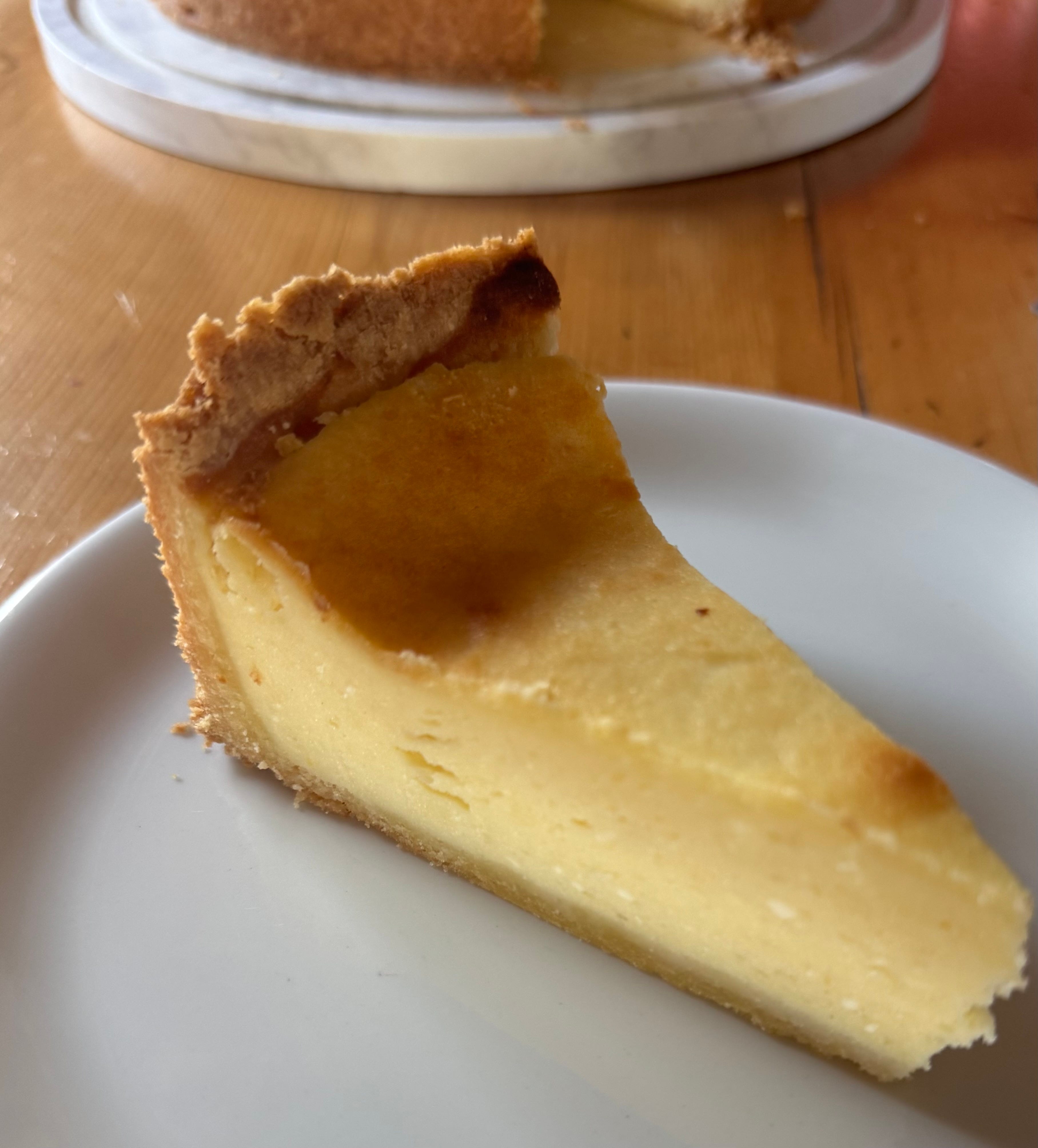
German Cheesecake
One of the quintessential German cakes is the German Cheesecake. It is light and almost creamy nothing like the high density cream cheese filling of the American cheesecake. Speaking of cream cheese, at the risk of being divisive, I don’t believe it belongs anywhere except on a bagel, but that’s a conversation for another day. There are many cheesecake recipe and I have played with a lot of them! This here is my current favorite version. I used to just copy my mother’s recipe but have in recent years added more fat via butter and whipped cream. To great results, I might add. So great that it elicited an enthusiastic “kann man so machen” from me, which all Germans know, is the highest of all praise. ( For the uninitiated: Kann man so machen literally translates to: one can do it like that, or I can live with that. The joke here is obviously the very, very muted nature of German praise.)
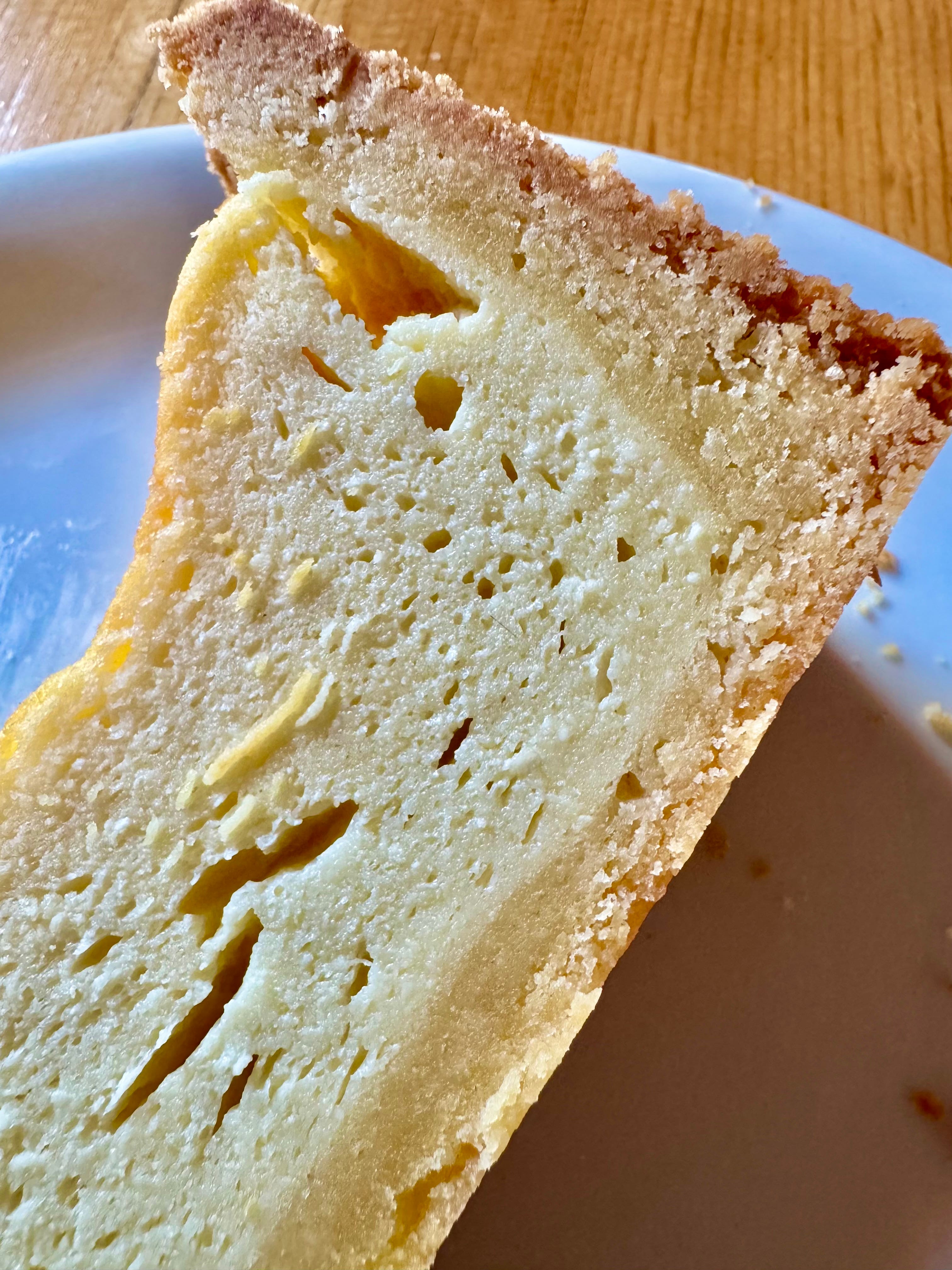
This is how I do it:
My go to short crust pastry is a simple 3-2-1. Three parts flour, two parts butter, 1 part sugar and one egg yolk. It is a great crust starting point. You can switch parts of the sugar to brown sugar, experiment with the fat content, leave out the egg for a more flaky crust or add a spoon of creme fraiche for moisture, or even add some baking powder if you want a lighter crust.
This recipe is for a 9 inch (23 cm) springform.
225 flour
150 butter
75 sugar
I egg yolk
1 pinch of salt
I make this dough in a food processor and then put it together by hand. But you can make the whole thing completely by hand. If the dough is a bit dry when you put it together, add a spoonful of whey, which is a by product from making the quark, or water. Let the short crust pastry rest in the fridge at least for an hour.
This is what you need for the cheesecake filling:
550 g quark
200 g heavy cream (whipped)
150 g sugar
100g butter
4 eggs plus one egg white from the crust
75 g all purpose flour
10 g corn starch
2/3 ts baking powder
1 lemon
1 ts vanilla extract
1/2 pinch salt
Rumor has it that I love Brown Cow Maple yoghurt and that I have added a couple of spoons to the mix in the past. I have to admit it is true, and it is always a hit.
Process:
Roll out the dough on a lightly floured work surface. Line the bottom of a 9 inch springform with parchment paper. Line the springform pan with the dough, pull the edge completely up. Prick the bottom several times with a fork and place the springform pan in the refrigerator until you are ready to fill it.
For the cheesecake filling, put room temperature soft butter in a bowl. Separate the eggs. Mix soft butter and egg yolks with mixer 2-3 minutes on medium speed. Add the sugar and vanilla extract, the zest from on lemon as well as the juice from half a lemon. Sift in the dry goods: flour, starch and baking powder into the bowl and mix carefully until well incorporated.
In two separate bowls beat first the egg whites with a pinch of salt until they form stiff peaks. Then beat the heavy cream until stiff. Incorporate first the quark into the egg, sugar, butter, flour mixture. Then carefully incorporate the whipped cream and lastly incorporate the egg whites. Goal is to keep everything as airy and light as possible. So do it with Fingerspitzengefühl.
Pour the entire cheesecake filling onto the prepared shortcrust base. Now bake at 325°F on the middle rack for about 60-65 minutes. After 20-25 minutes of baking, briefly remove the cake from the oven and make a shallow cut (about 1 cm deep) all around the edge between the shortcrust pastry and the cheesecake filling with a sharp knife. This will prevent the surface from cracking. The cake will rise as lot but will sink again after baking.
To avoid the cake sinking too much, leave it in the oven, turn the oven off and put a wooden spoon in the oven door, so it is open just a crack. Let the cake cool down in the oven for 4-5 hours.
Laßt’s euch schmecken!!!
Welcome to Substack! I’m new, too, but am loving it so far. My mother was from Germany and my husband, as well, so I understand the Quark situation lol. I wanted to share a cookbook I found from a lovely young woman I follow on Instagram, Audrey Leonard. She goes through the Quark making process in it, and the name of the book is Süss. I was drawn to it because it is the same name as my cookie business and ended up being full of lovely authentic German recipes. Happy baking! Tschüss!
I’m so glad you’ve undertaken a Substack! I’ve followed you on Instagram & really enjoyed the content, but I knew there had to be a lot of knowledge behind all of those cakes. Thank you for sharing & I’m going to attempt this one for my cheesecake-loving husband.